Bioconstrucción · Bioparque Amaru · CuencaBioconstruction · Bioparque Amaru · Cuenca
Bioconstrucción · Bioparque Amaru · CuencaBioconstruction · Bioparque Amaru · Cuenca
◆ El Proyecto◆ The Project
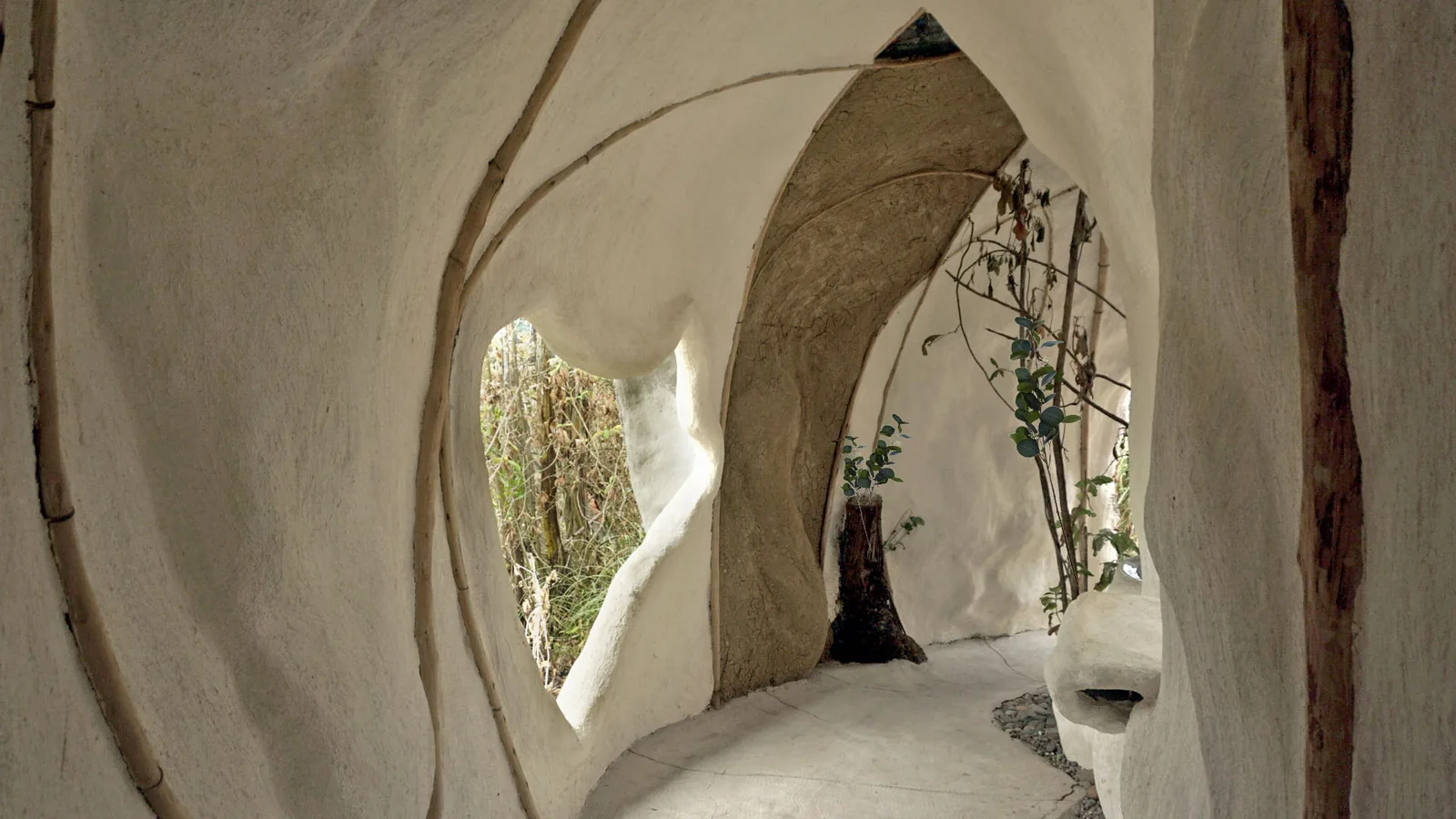
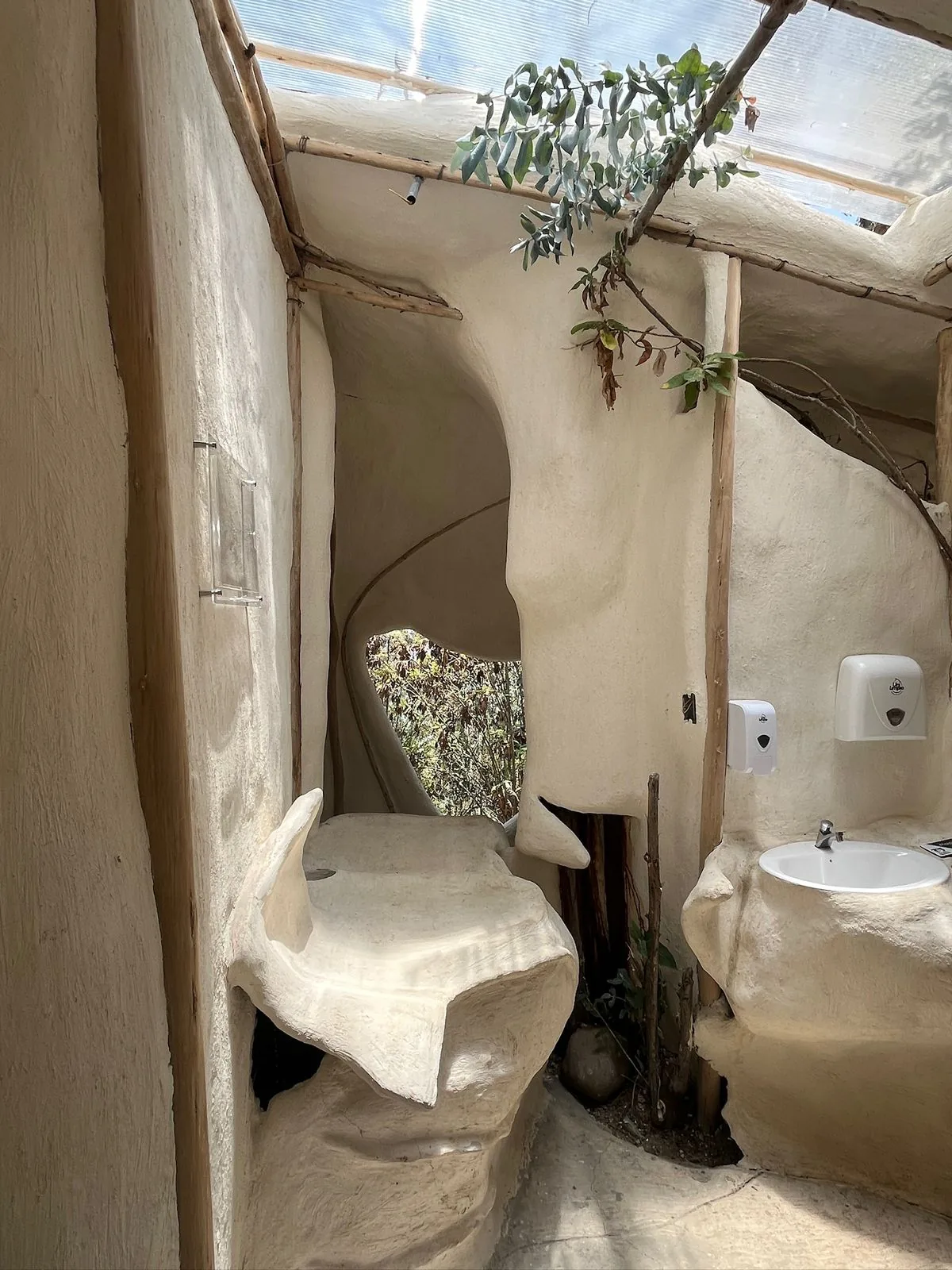
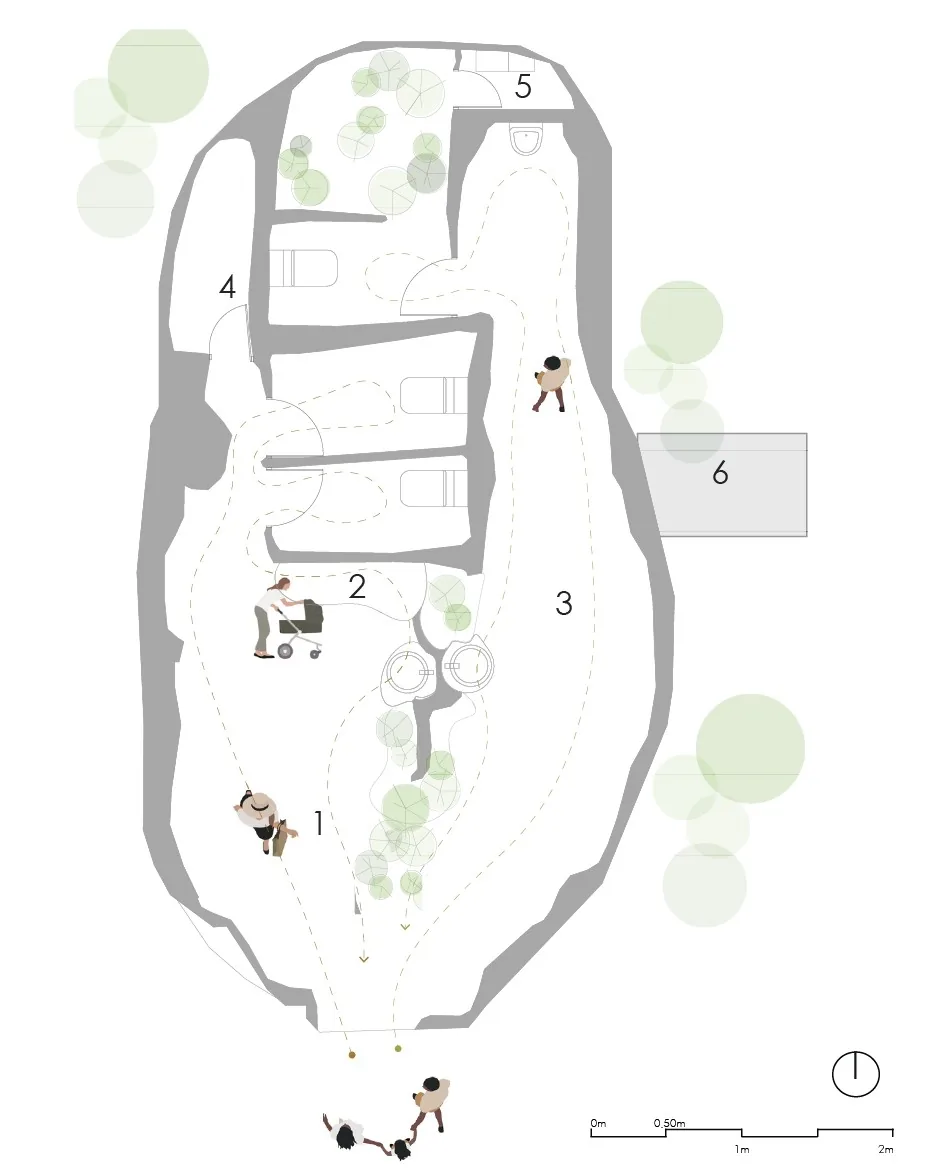
Este proyecto presenta una cúpula irregular cuidadosamente diseñada para integrarse de manera natural con su entorno, fomentando una conexión armónica con el sitio y su vegetación. Mediante el uso de materiales locales y reciclados, junto con innovadores sistemas de tratamiento de aguas residuales desarrollados en colaboración con organismos naturales, el diseño minimiza el consumo de recursos, reduce costos y resalta la relación simbiótica entre el ser humano y el medio ambiente.
This project features an irregular dome carefully designed to blend naturally with its surroundings, fostering a harmonious connection with the site and its vegetation. By using local and recycled materials, along with innovative wastewater treatment systems developed in collaboration with natural organisms, the design minimizes resource consumption, reduces costs, and highlights the symbiotic relationship between humans and the environment.
La estructura utiliza tierra compactada, madera local y fibras naturales. El diseño de la cubierta imita la geometría de los nidos de aves del páramo local, generando una forma que funciona tanto como refugio humano como hábitat para otras especies.
A shell-like structure — built primarily from earth, locally sourced wood, and glass — became the architectural response. Through close collaboration with biologists, the internal temperature and humidity were carefully regulated to meet the animals' needs. As a result, the living conditions and well-being of these creatures were significantly improved.
◆ Ficha Técnica◆ Technical Sheet
53
m²
45%
Materiales locales
Local materials
8+
Especies integradas
Integrated species
35%
Materiales reciclados
Recycled materials
◆ Documentación◆ Documentation
◆ Proceso de Diseño◆ Design Process
01
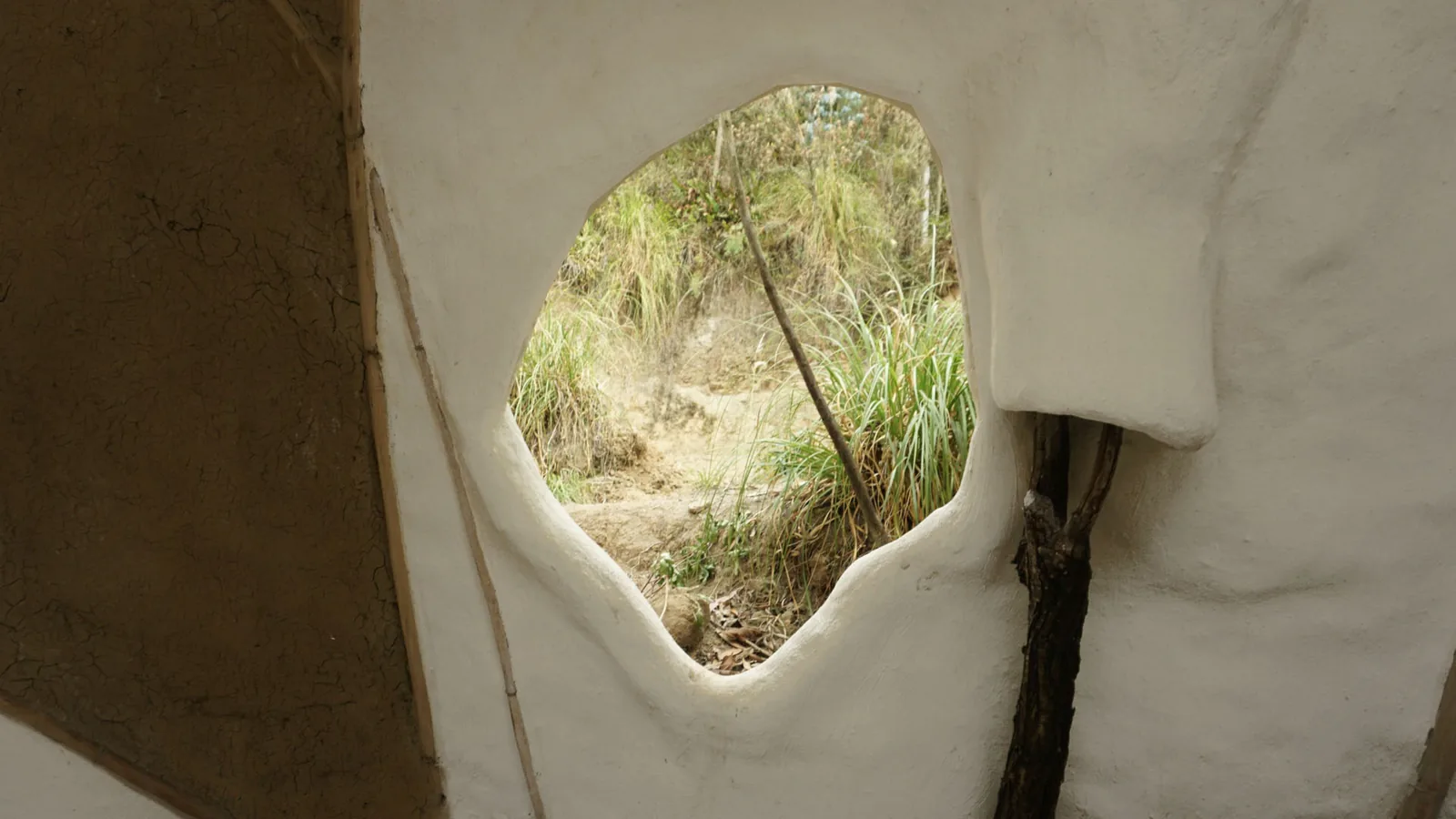
Mapeo de la vegetación existente, la topografía y las condiciones naturales del lugar para definir una arquitectura que no borre el entorno, sino que lo incorpore. La forma del proyecto nace del respeto por los árboles, el terreno y la atmósfera del bioparque.
Mapping of existing vegetation, topography, and natural conditions to define an architecture that does not erase the environment, but incorporates it. The project's form is born from respect for the trees, terrain, and atmosphere of the biopark.
02
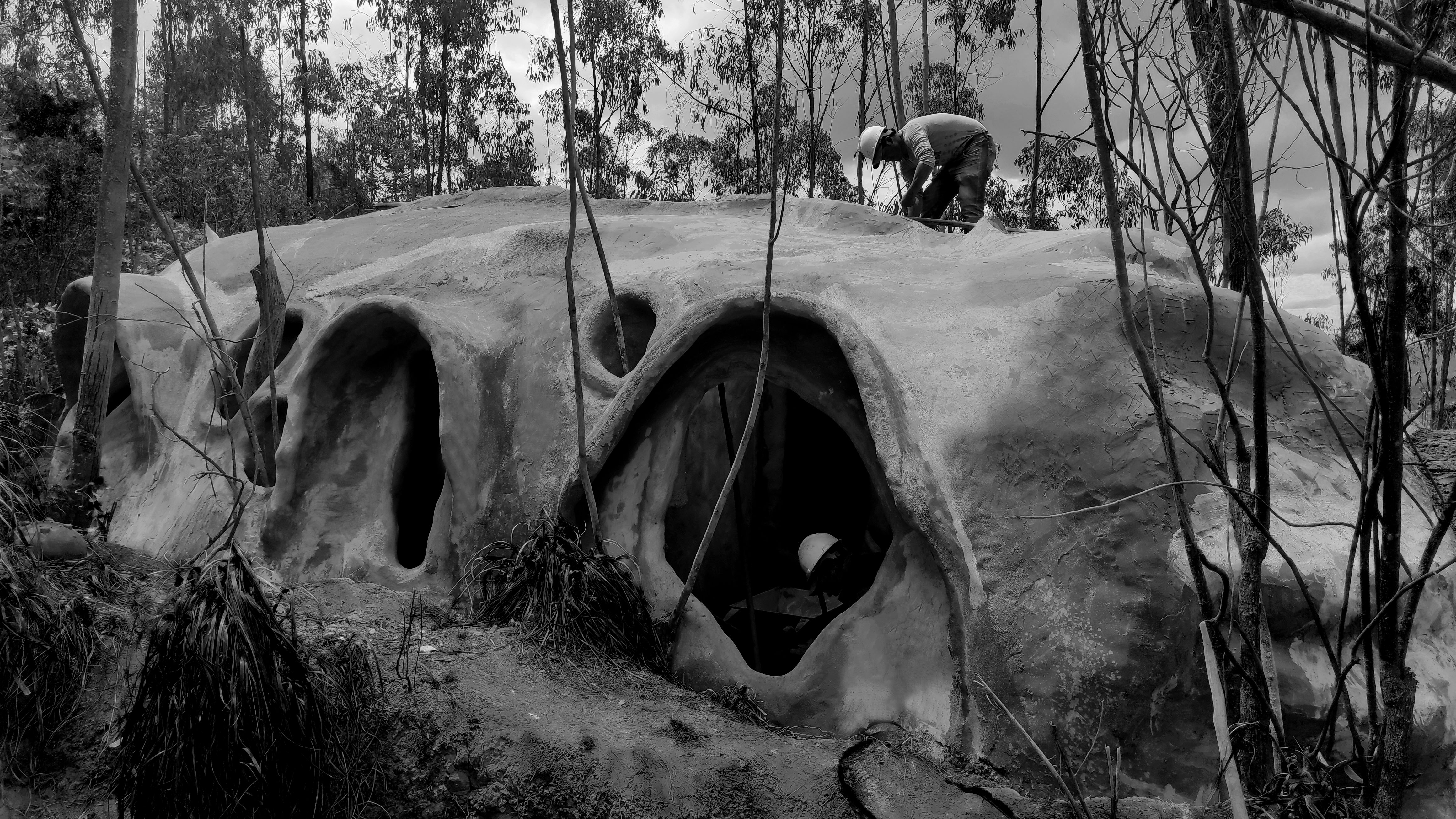
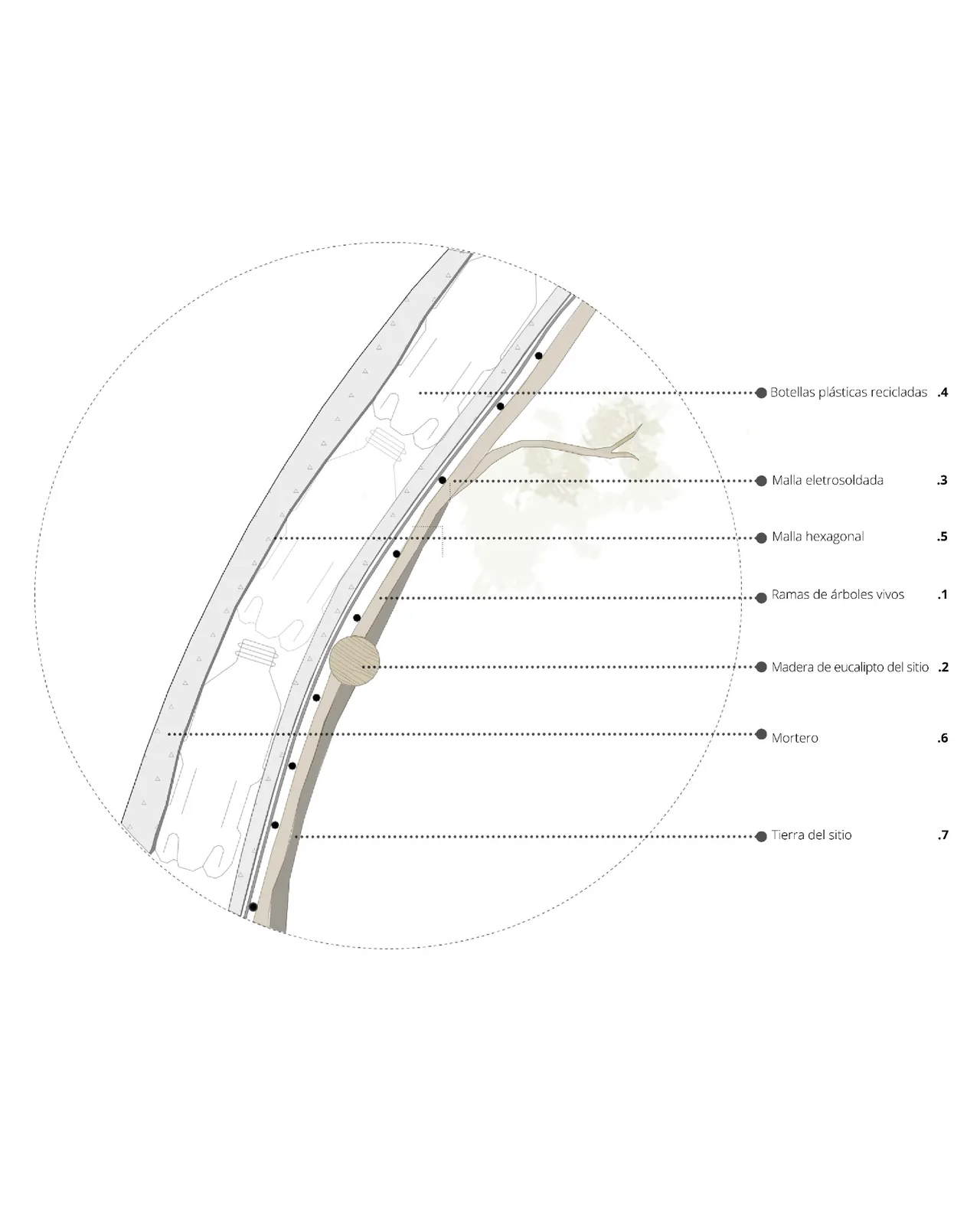
Construcción con madera del sitio, tierra, ramas, malla y materiales reciclados, incluyendo botellas plásticas recolectadas en el bioparque. La estructura se concibe como una cueva orgánica que reduce recursos, aprovecha saberes artesanales y se integra visualmente al paisaje.
Construction with on-site wood, earth, branches, mesh, and recycled materials — including plastic bottles collected at the biopark. The structure is conceived as an organic cave that reduces resources, draws on artisanal knowledge, and integrates visually into the landscape.
03
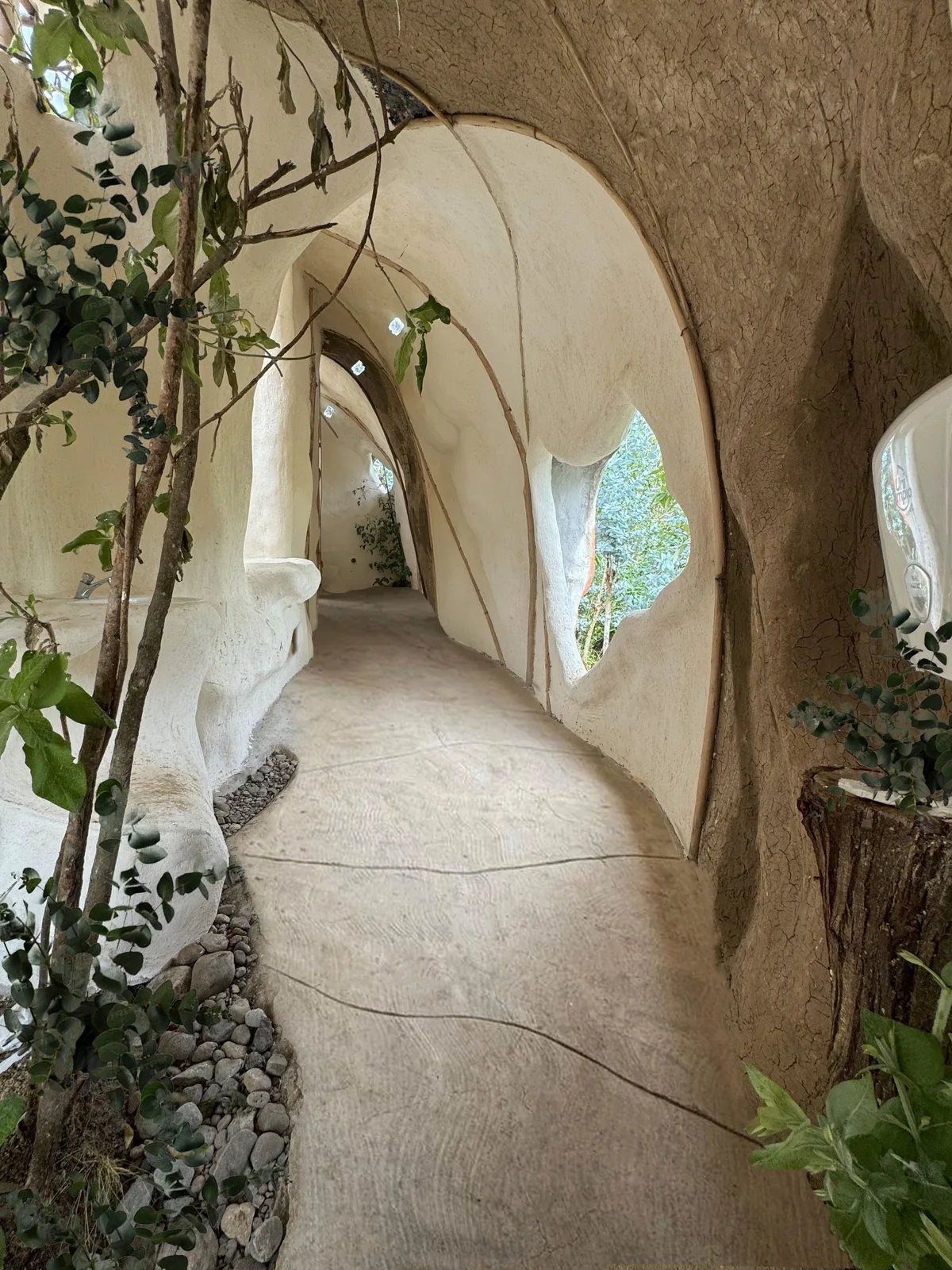
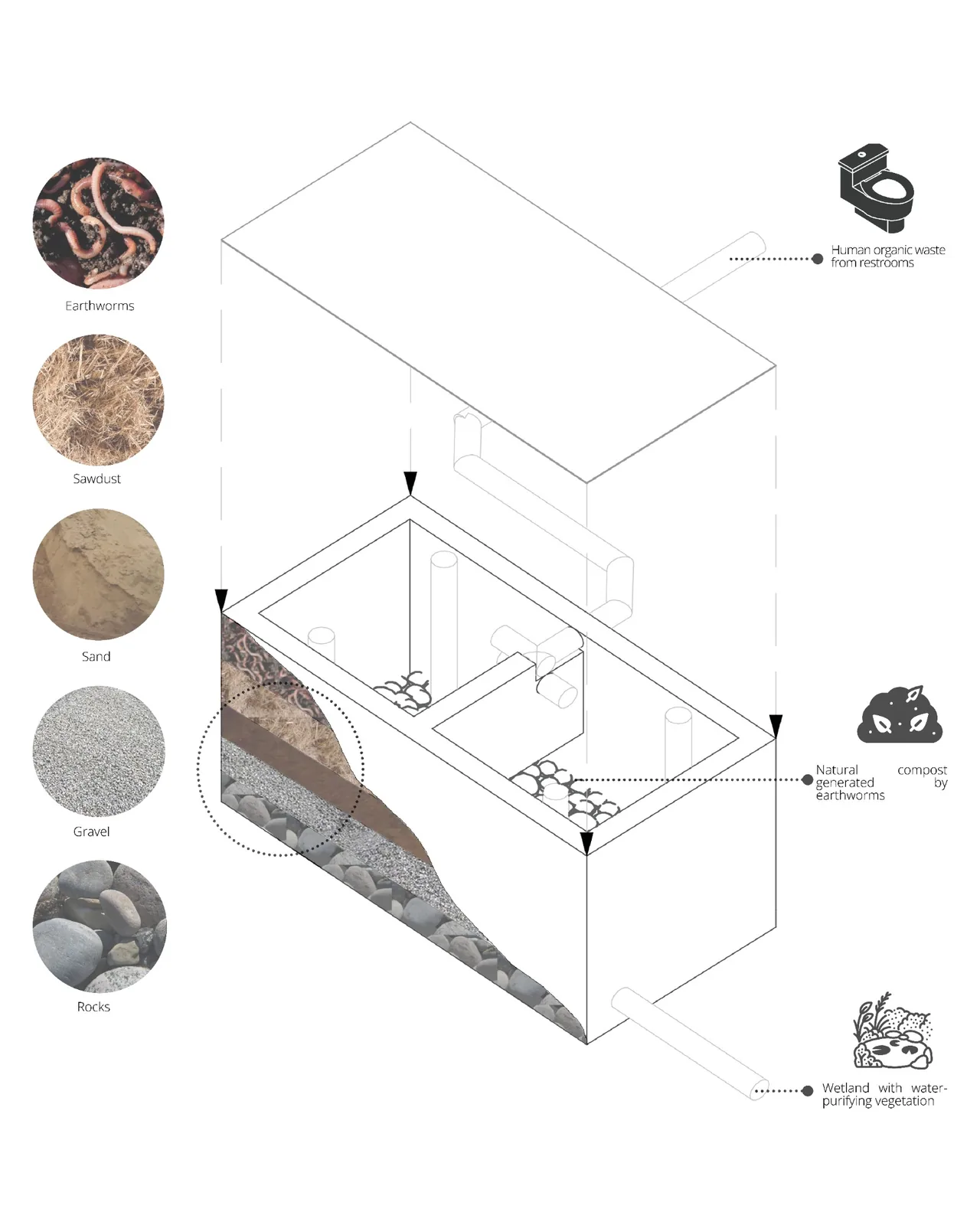
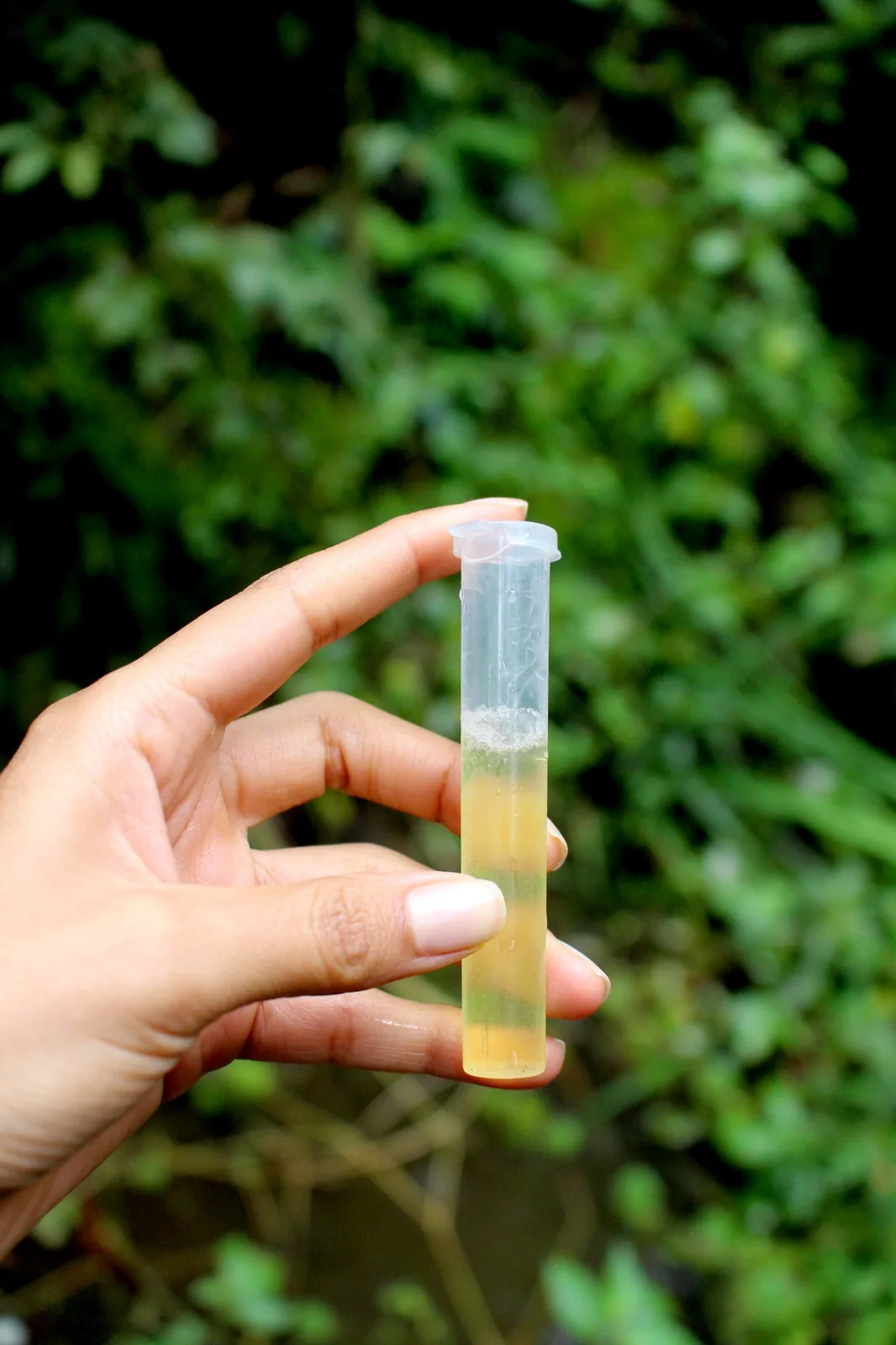
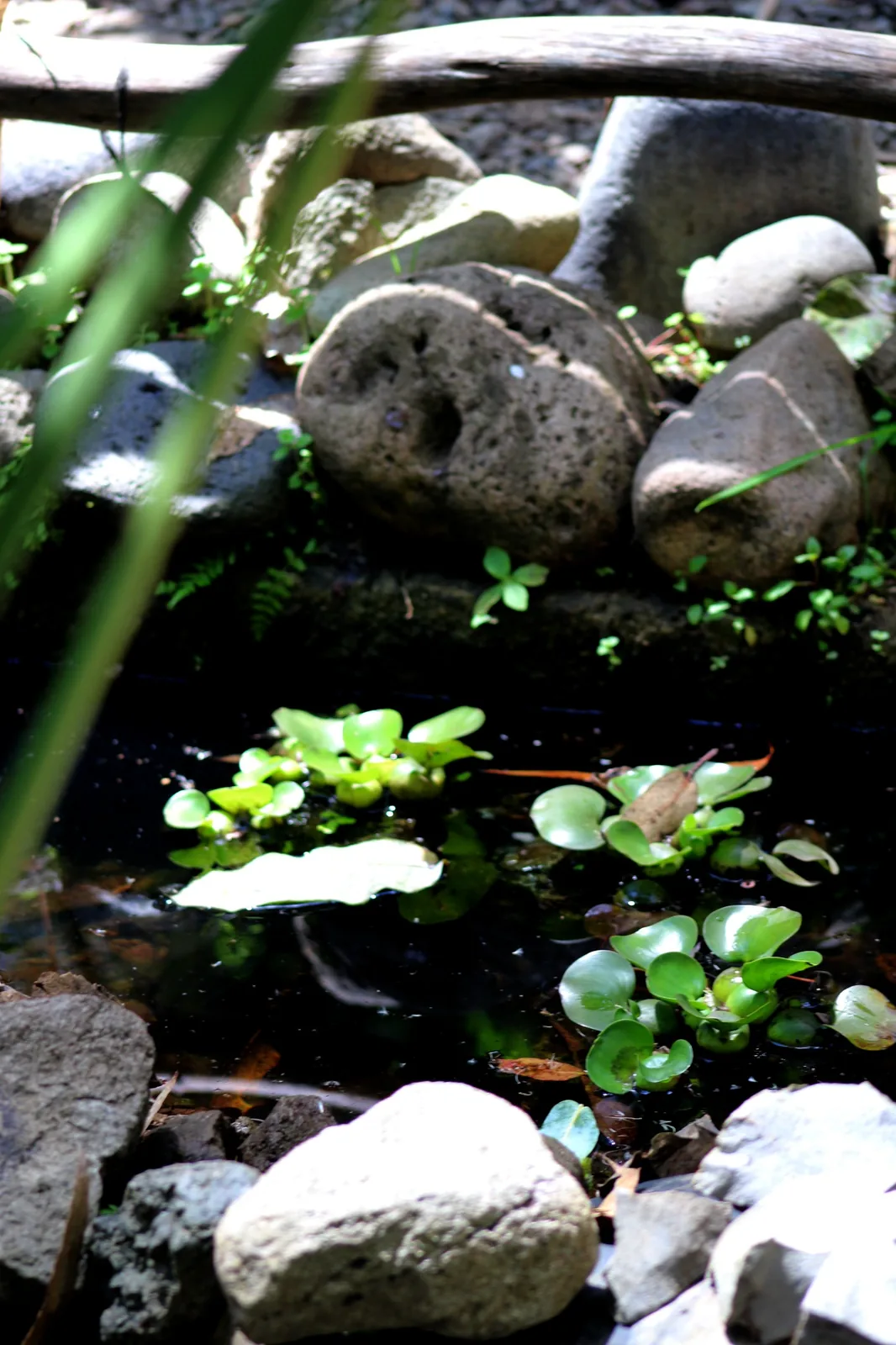
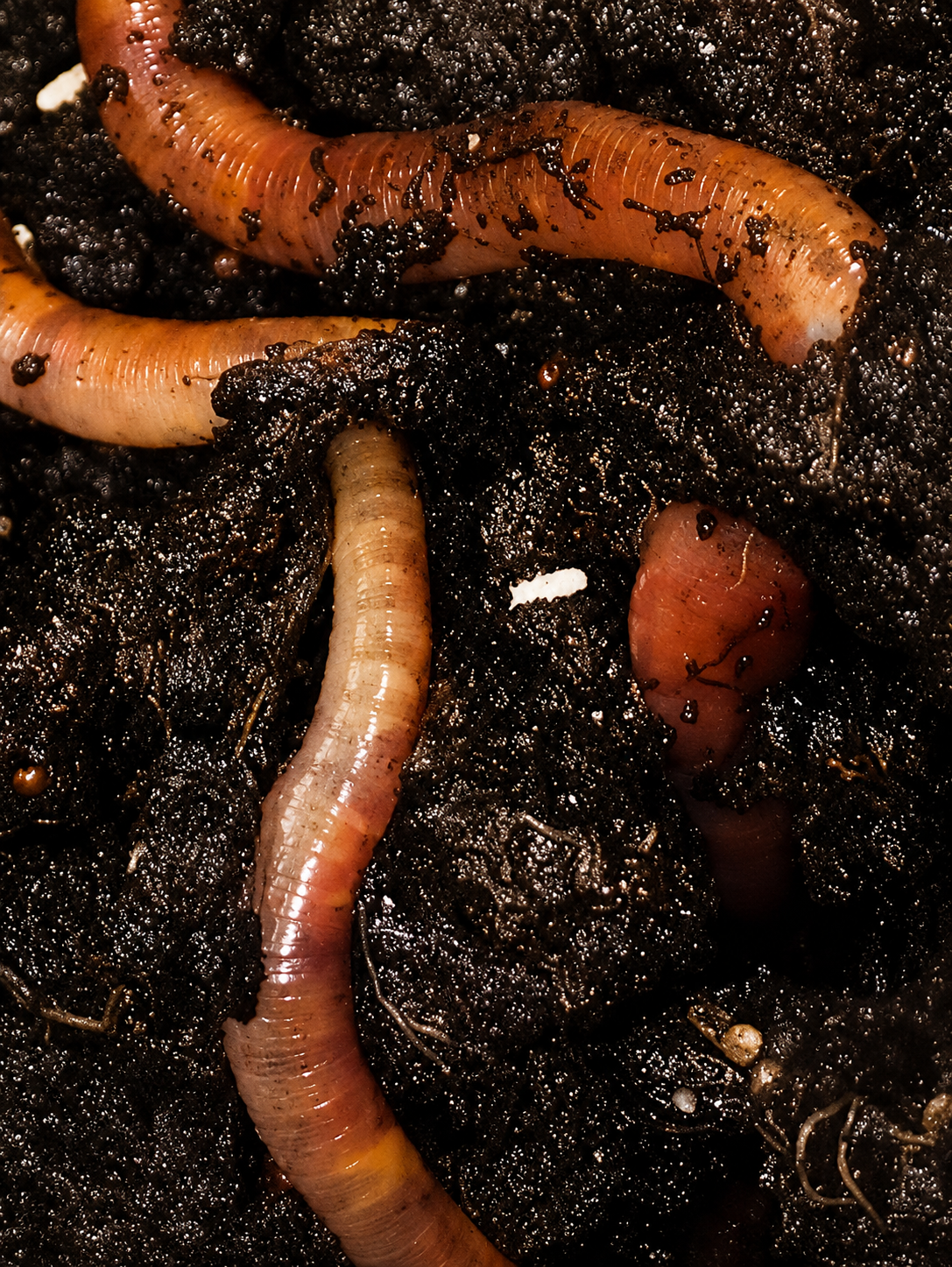
Integración de un vermifiltro y un humedal artificial para tratar las aguas residuales mediante lombrices, plantas acuáticas y microorganismos. El baño deja de ser solo infraestructura y se convierte en un sistema vivo que transforma residuos en compost y agua apta para riego.
Integration of a vermifilter and an artificial wetland to treat wastewater using worms, aquatic plants, and microorganisms. The bathroom ceases to be mere infrastructure and becomes a living system that transforms waste into compost and water suitable for irrigation.
◆ Materiales◆ Materials
Tierra compactada
Compacted earth
Extraída del sitio de construcción
Extracted from the construction site
Madera local
Local timber
Eucalipto cultivado en el sitio utilizado para la construcción de la estructura
Eucalyptus grown on site used for the structural construction
Botellas recicladas
Recycled bottles
Integradas como módulos constructivos en muros y cubierta
Integrated as construction modules in walls and roof
Plantas nativas
Native plants
Pared de bromelias y cascada construida con llantas naturales
Bromeliad wall and waterfall built with natural tires