Santuario · Bioparque Amaru · CuencaSanctuary · Bioparque Amaru · Cuenca
Santuario · Bioparque Amaru · CuencaSanctuary · Bioparque Amaru · Cuenca
◆ El Proyecto◆ The Project
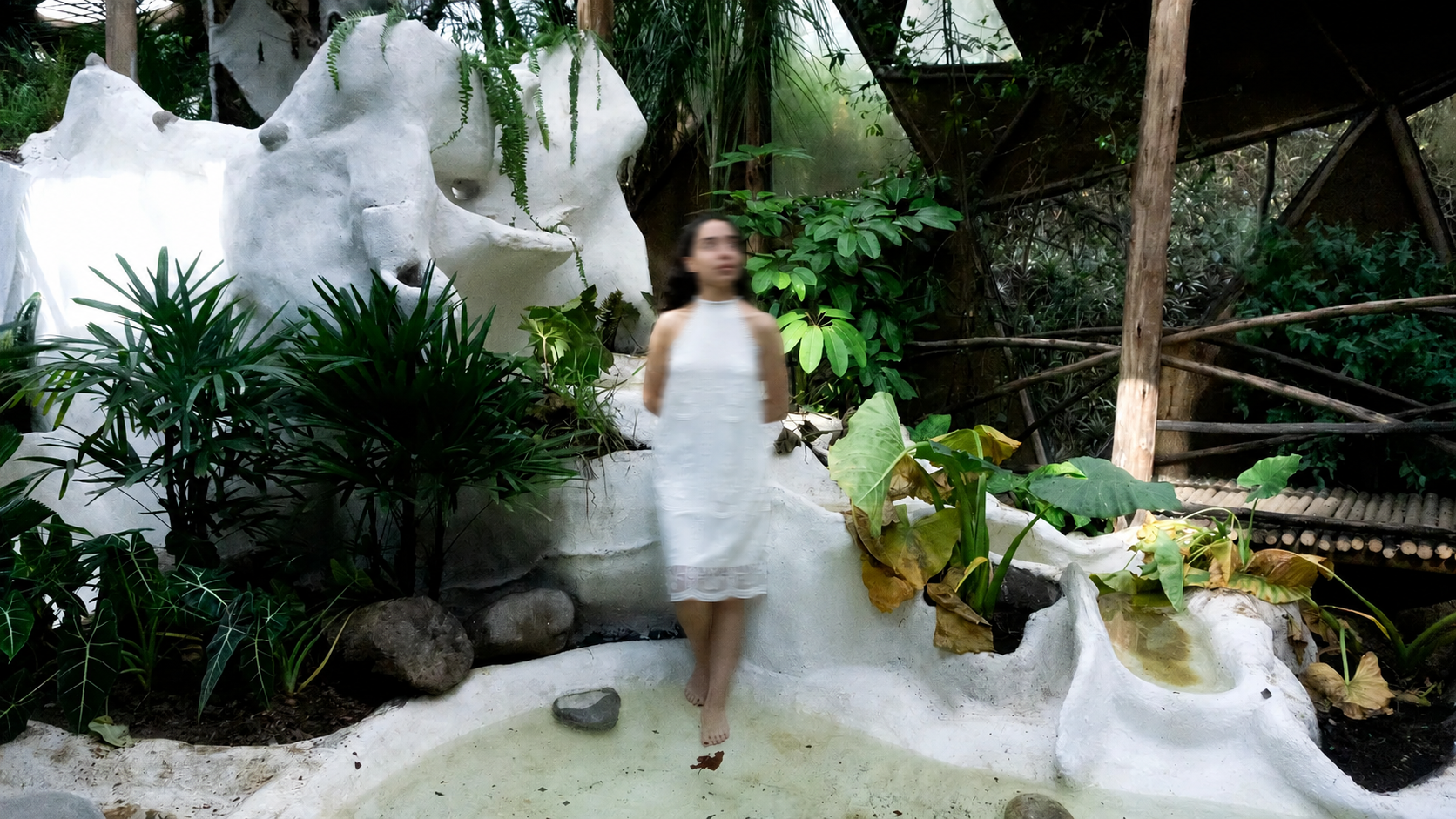
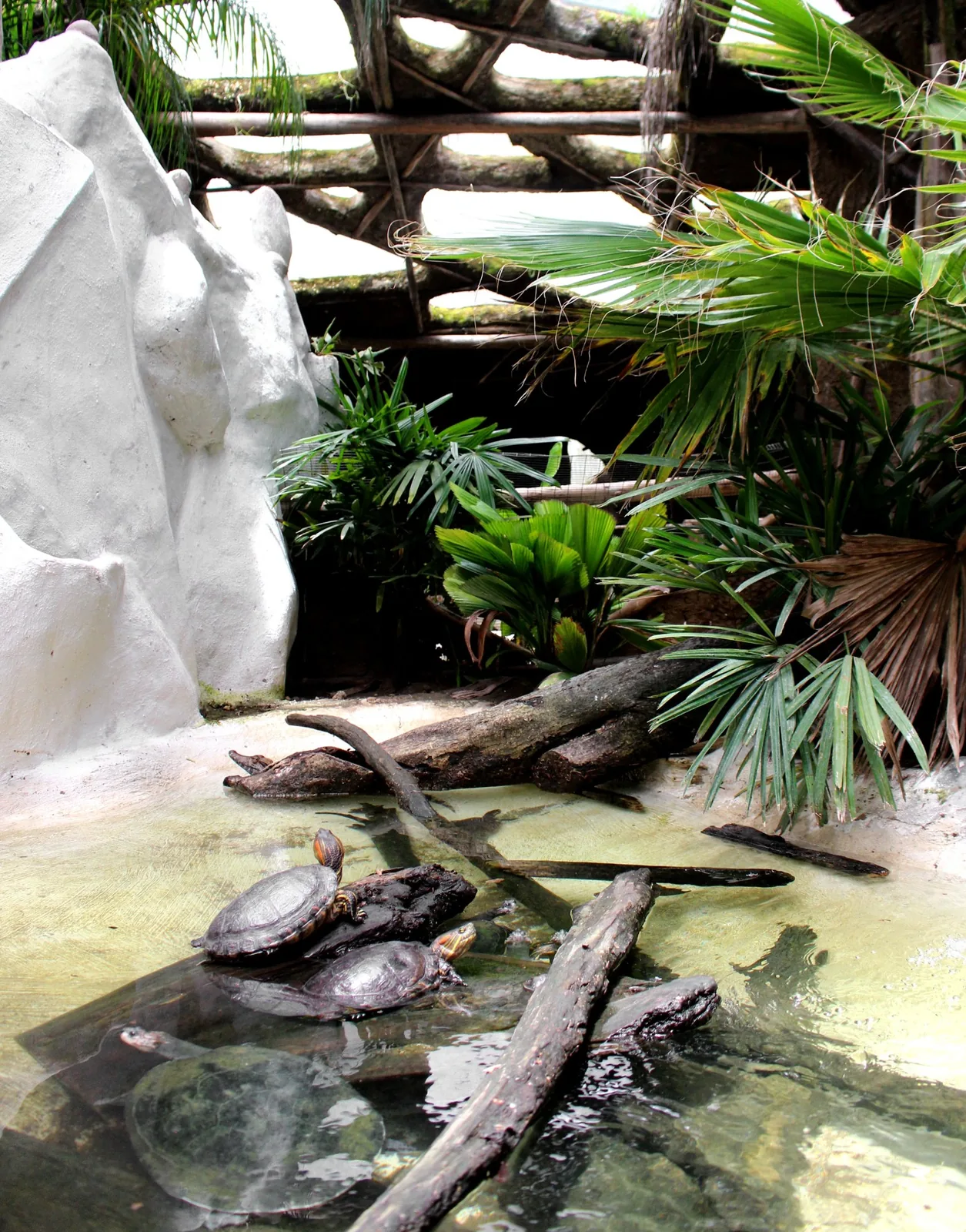
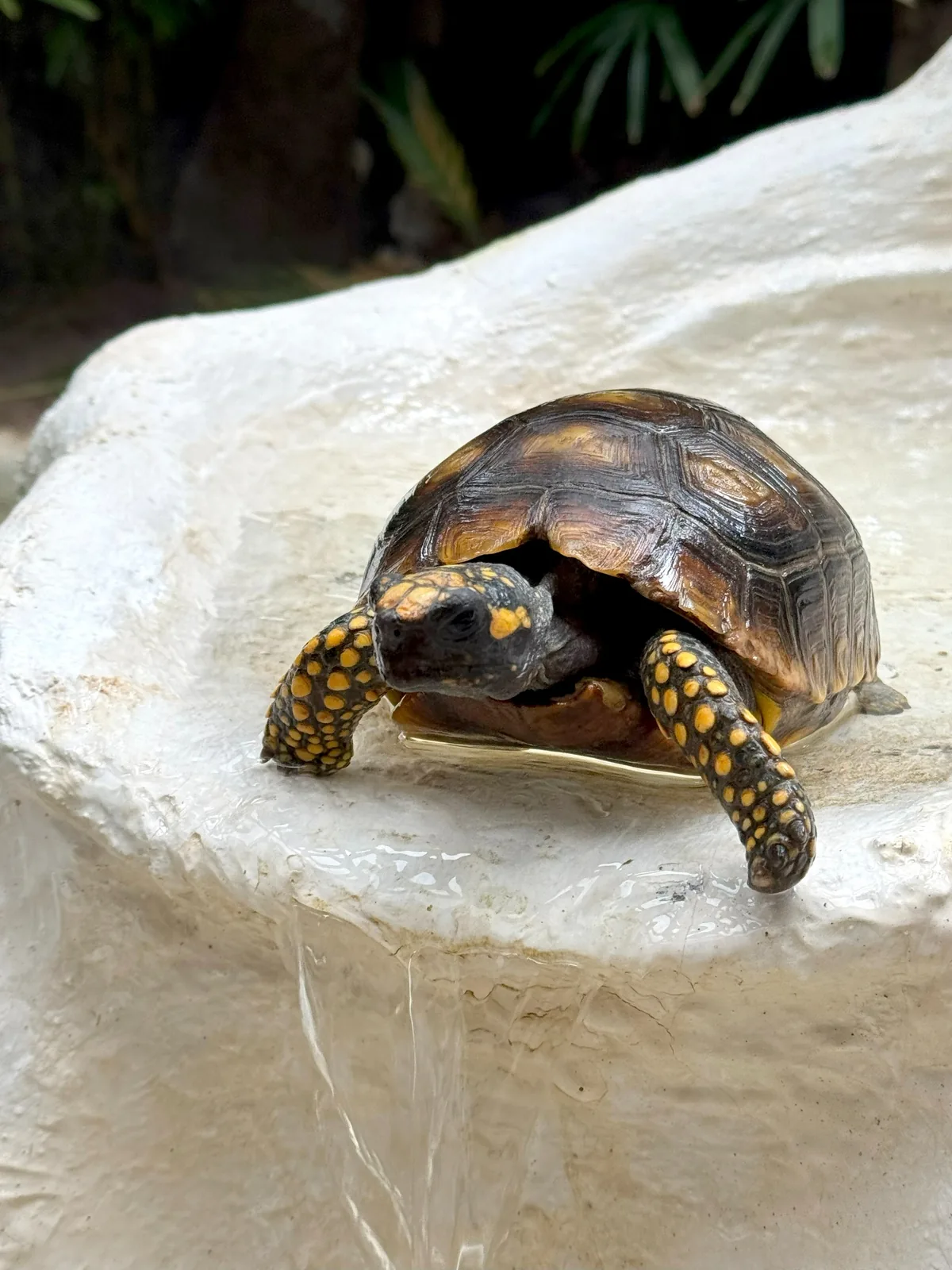
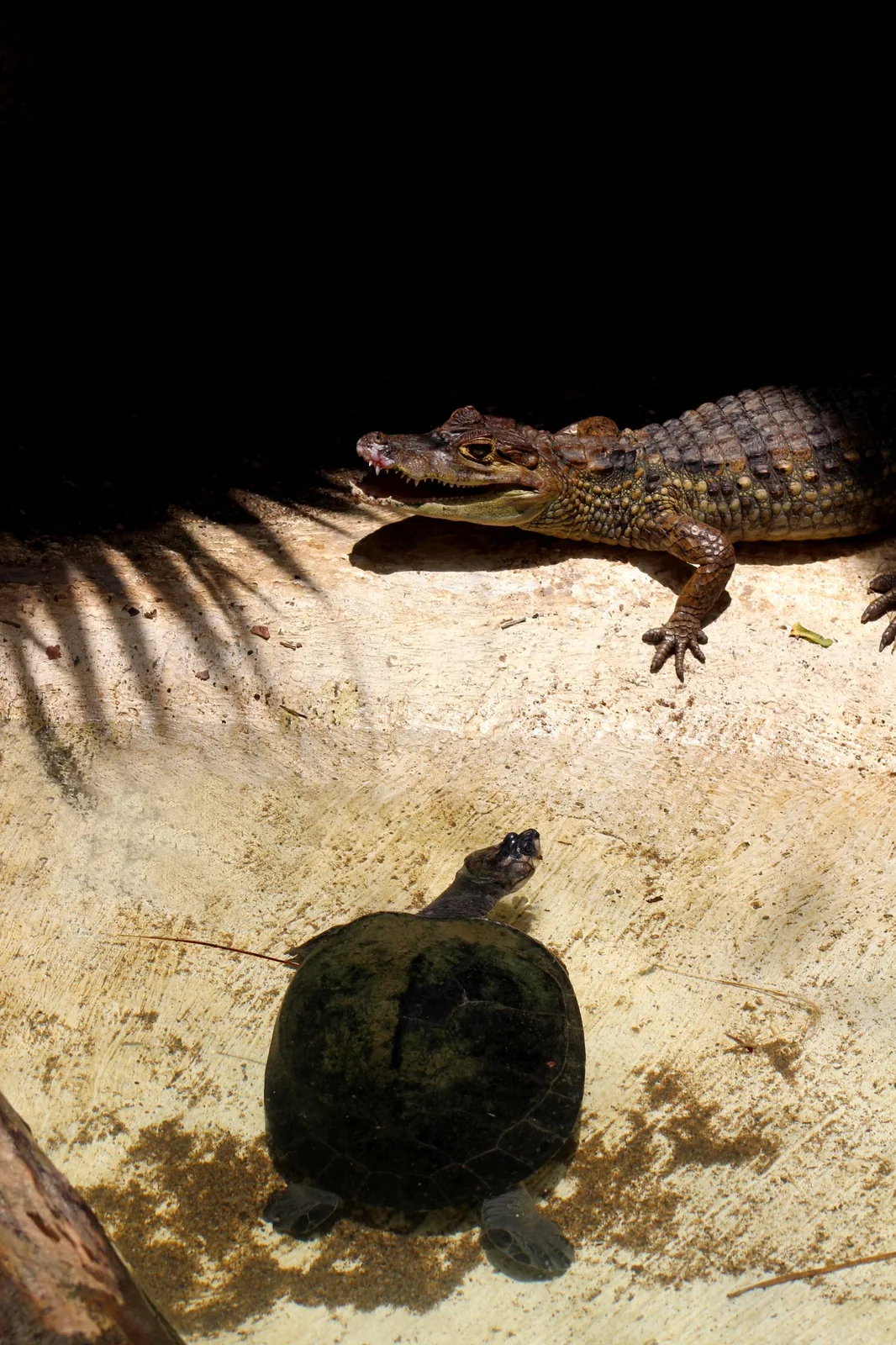
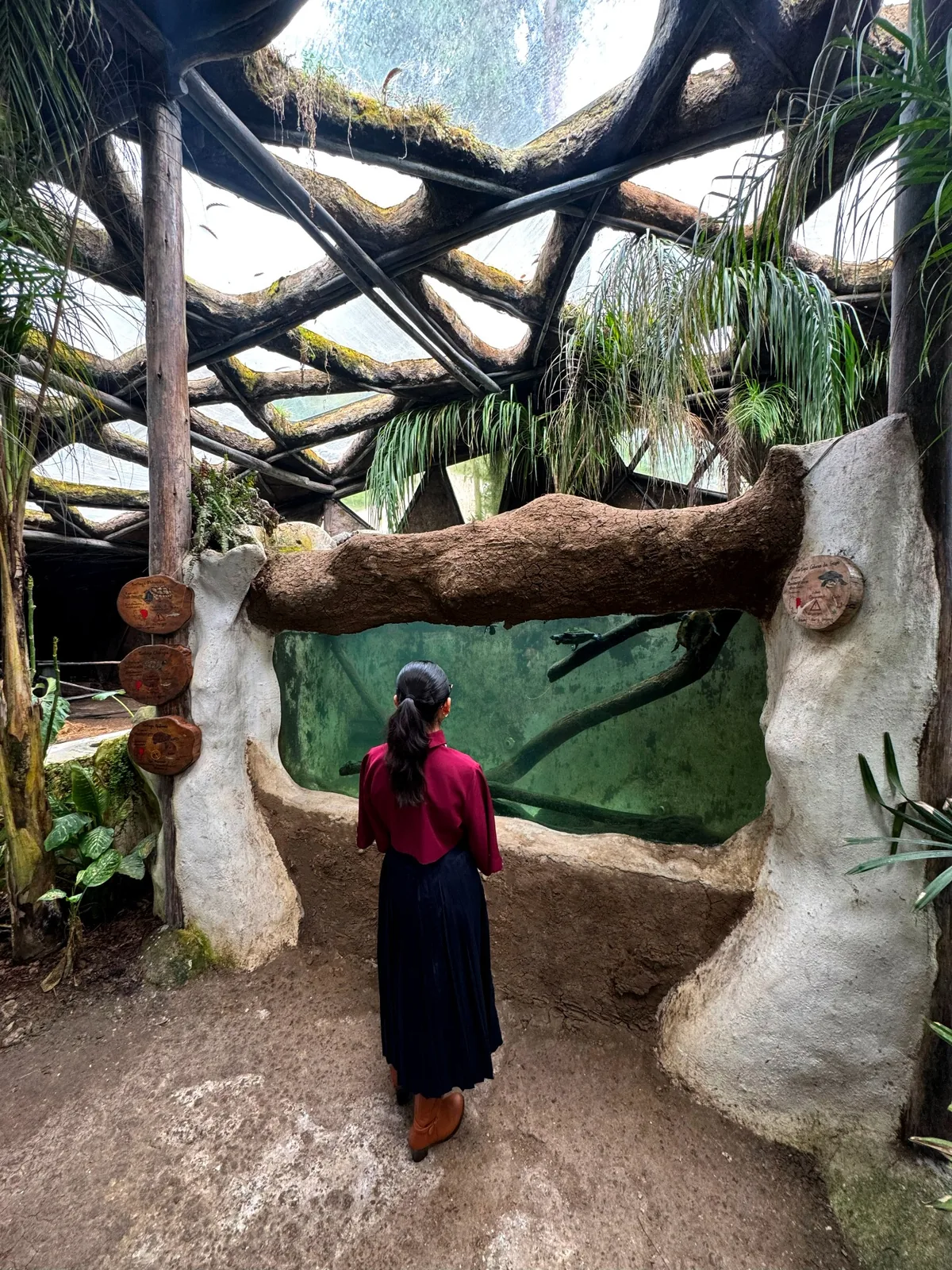
Este proyecto nació con un propósito claro: crear el hábitat óptimo para tortugas, quelonios y caimanes rescatados dentro de programas de conservación. El principal desafío fue recrear un ambiente tropical adecuado para estas especies en un bioparque ubicado en la región andina, donde el clima natural difiere significativamente de sus ecosistemas de origen.
This project was conceived to provide an optimal habitat for rescued turtles, tortoises, and caimans within conservation programs. The main challenge was to recreate a suitable tropical environment for these species in a biopark located in the Andean region, where the natural climate differs significantly from their native ecosystems.
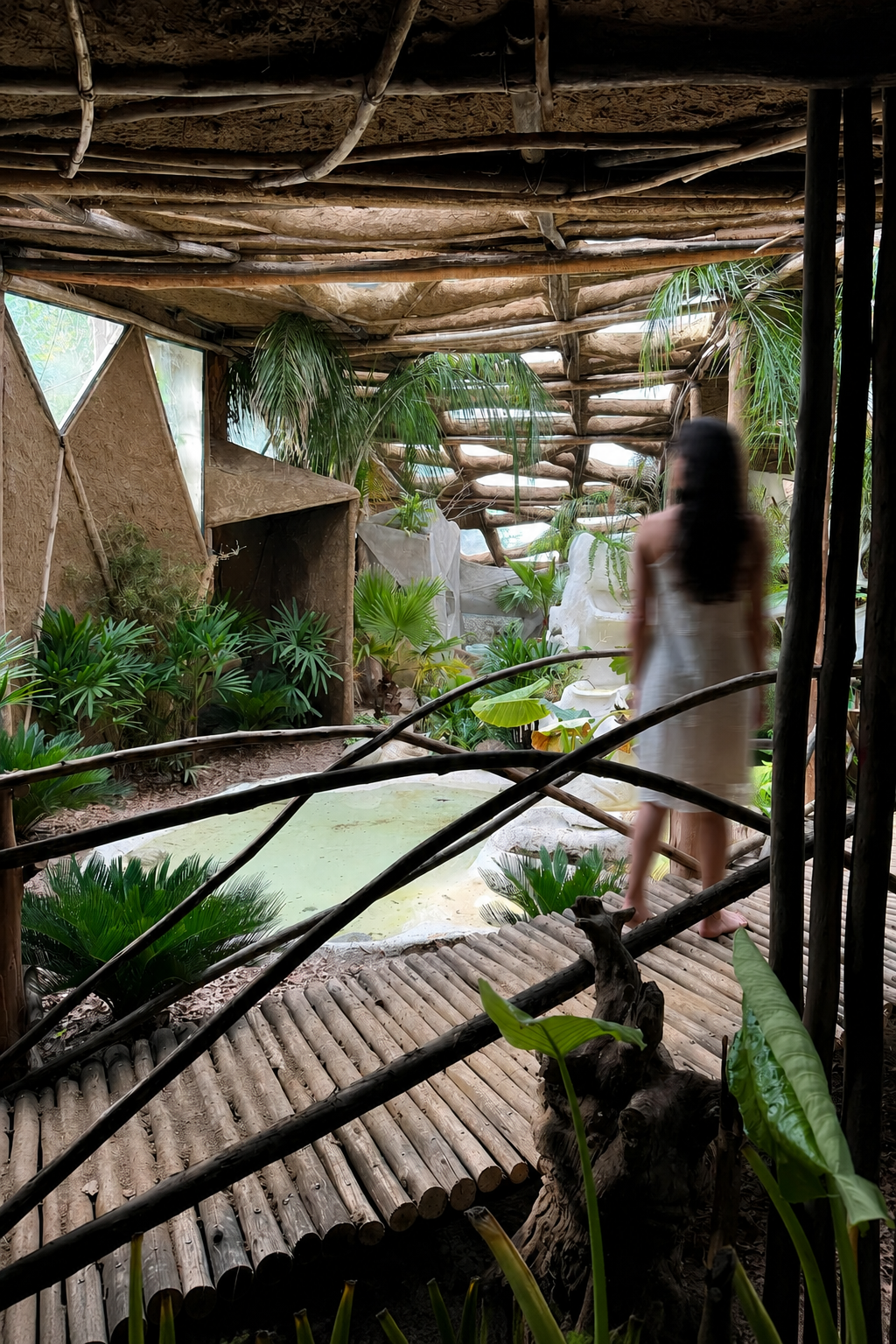
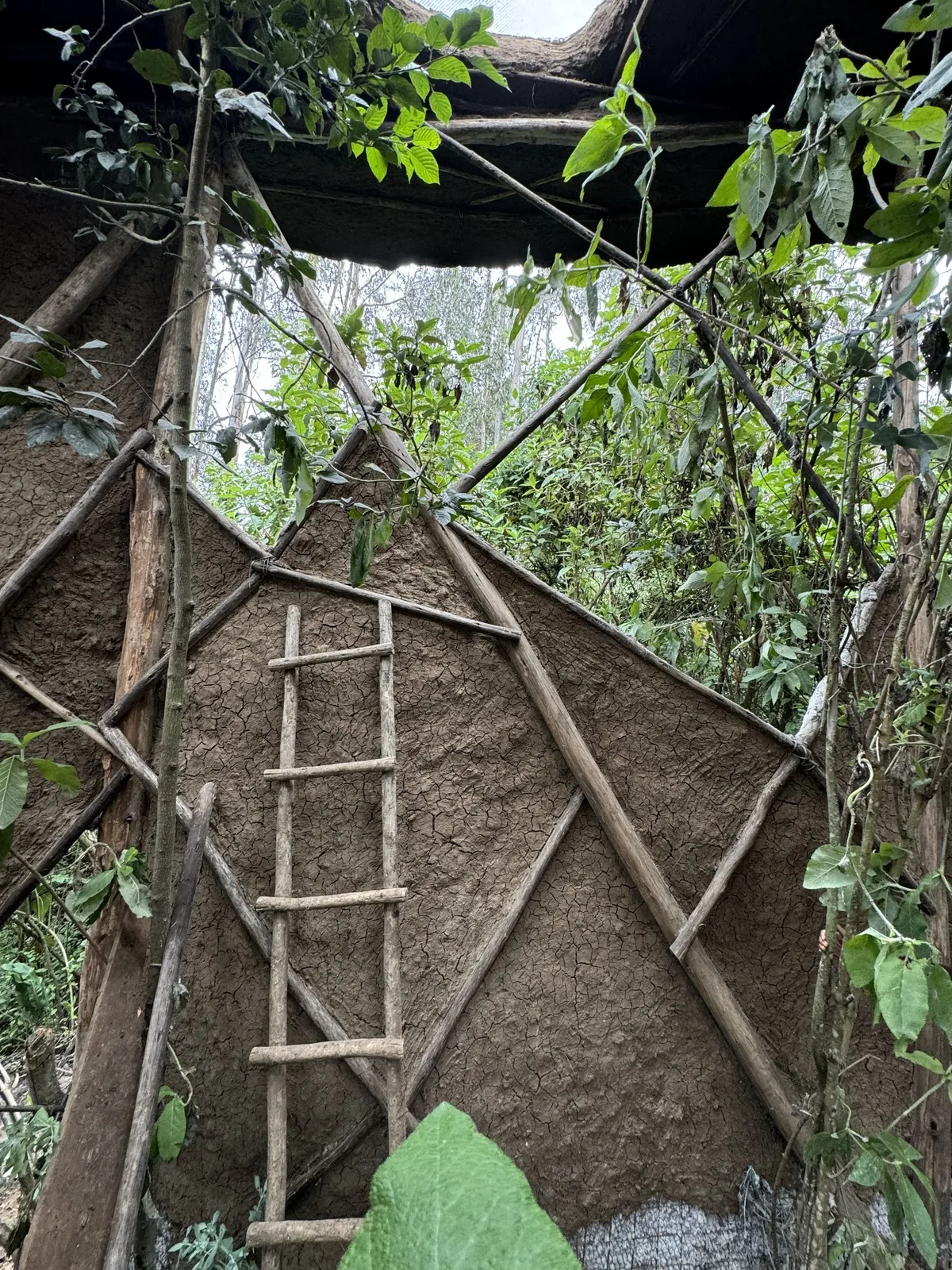
Una estructura en forma de caparazón — construida principalmente con tierra, madera local y vidrio — se convirtió en la respuesta arquitectónica. A través de una estrecha colaboración con biólogos, se reguló cuidadosamente la temperatura y la humedad internas para satisfacer las necesidades de los animales. Como resultado, las condiciones de vida y el bienestar de estas criaturas mejoraron significativamente.
A shell-like structure — built primarily from earth, locally sourced wood, and glass — became the architectural response. Through close collaboration with biologists, the internal temperature and humidity were carefully regulated to meet the animals' needs. As a result, the living conditions and well-being of these creatures were significantly improved.
◆ Ficha Técnica◆ Technical Sheet
250
m²
50%
Materiales locales
Local materials
12+
Especies integradas
Integrated species
30%
Reutilización de obra preexistente
Reuse of preexisting structure
◆ Documentación◆ Documentation
◆ Proceso de Diseño◆ Design Process
01
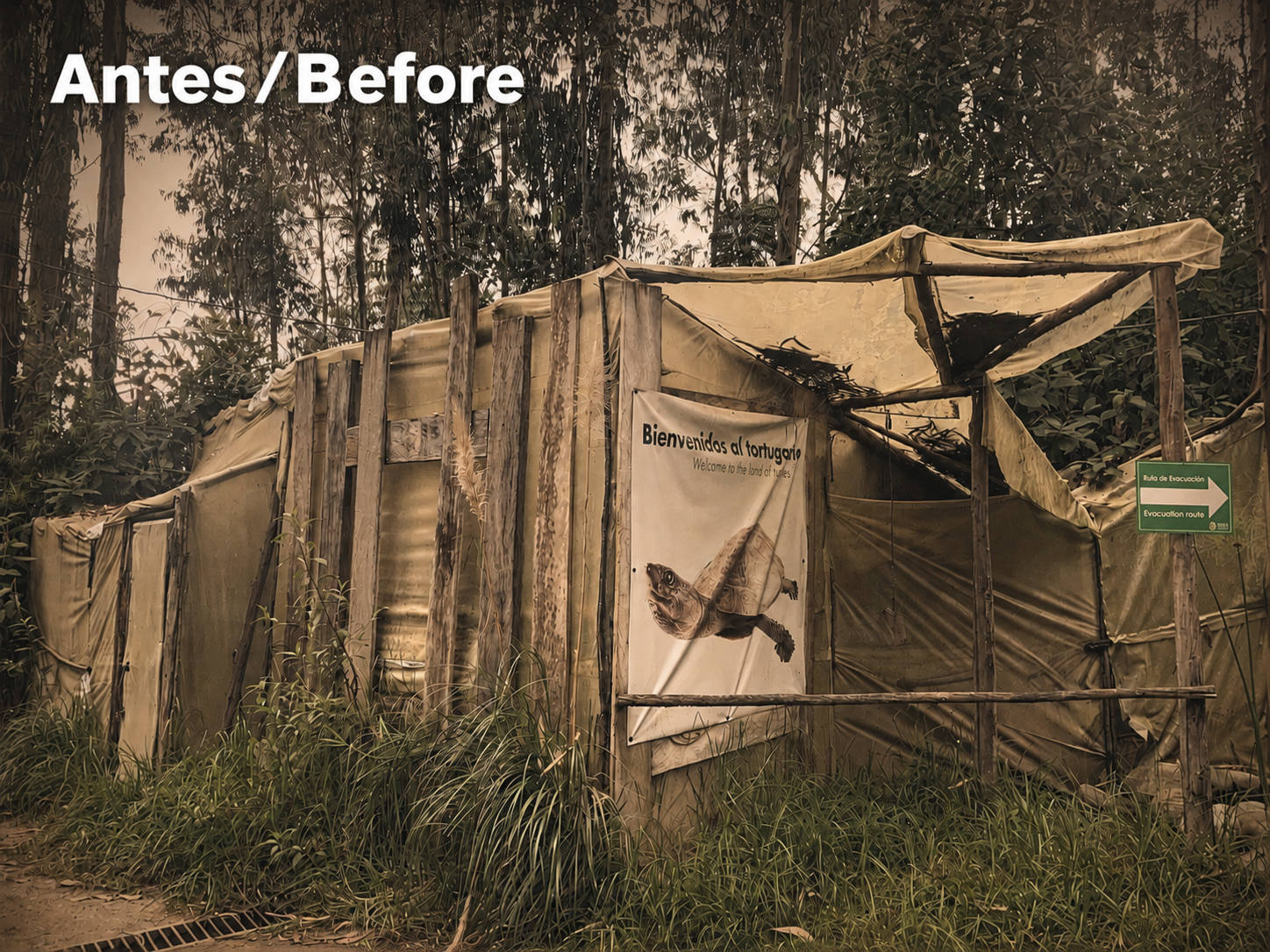
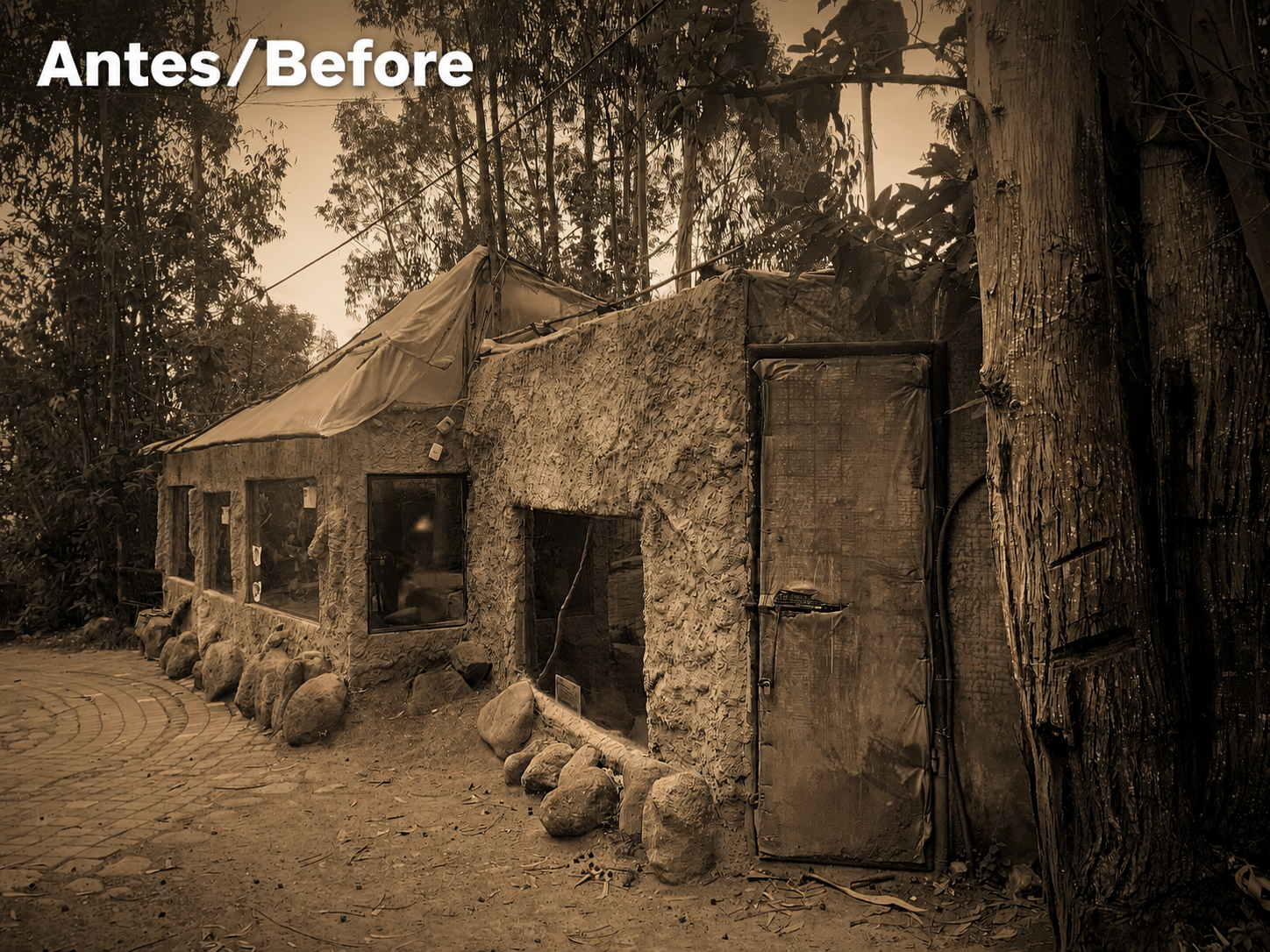
Estudio de tortugas y caimanes rescatados para definir sus necesidades de temperatura, humedad, radiación solar, agua, sombra y sustrato. Esta información guió la transformación del antiguo recinto en un hábitat más adecuado para su bienestar.
Study of rescued turtles and caimans to define their needs for temperature, humidity, solar radiation, water, shade, and substrate. This information guided the transformation of the old enclosure into a more suitable habitat for their wellbeing.
02
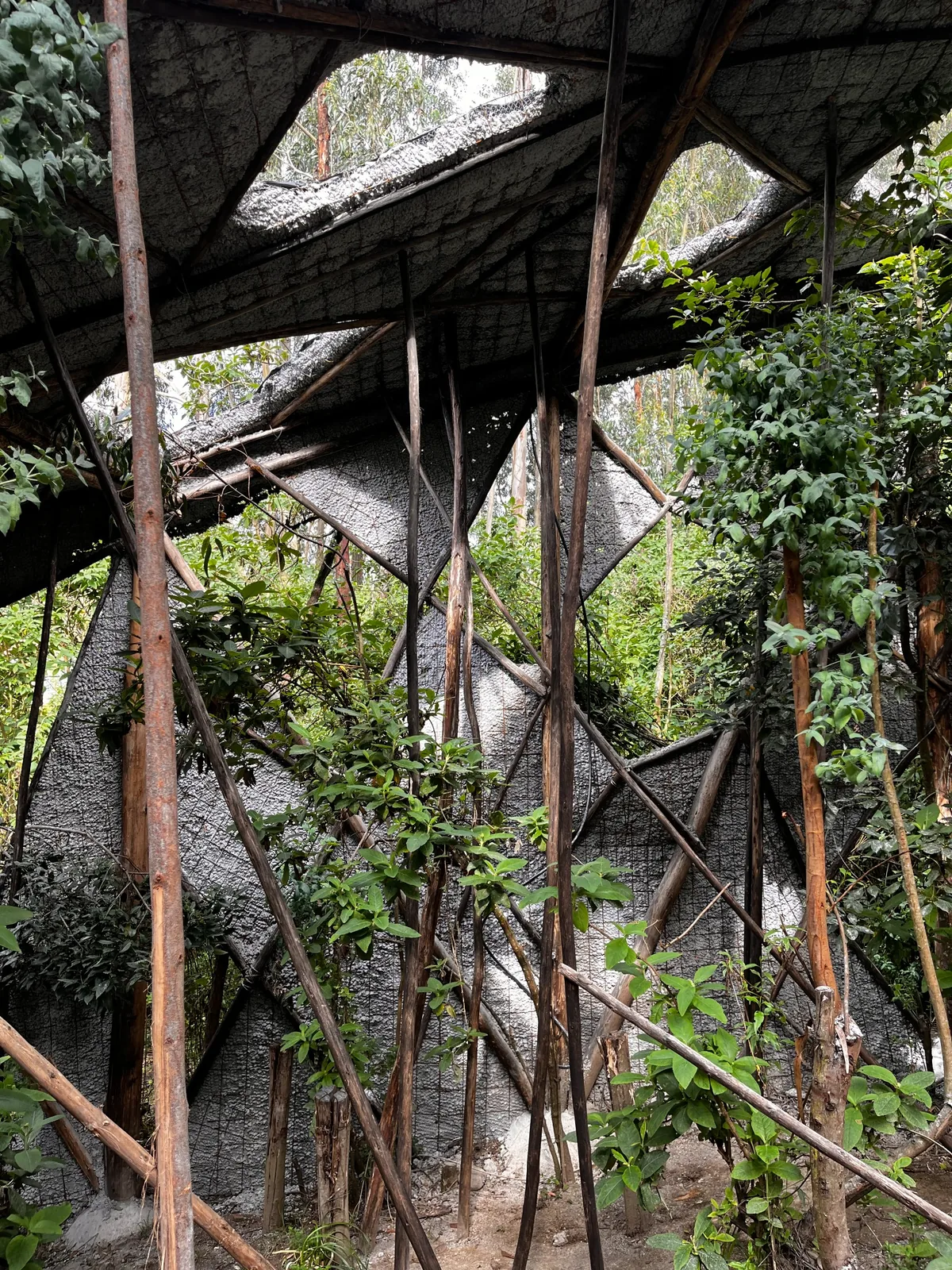
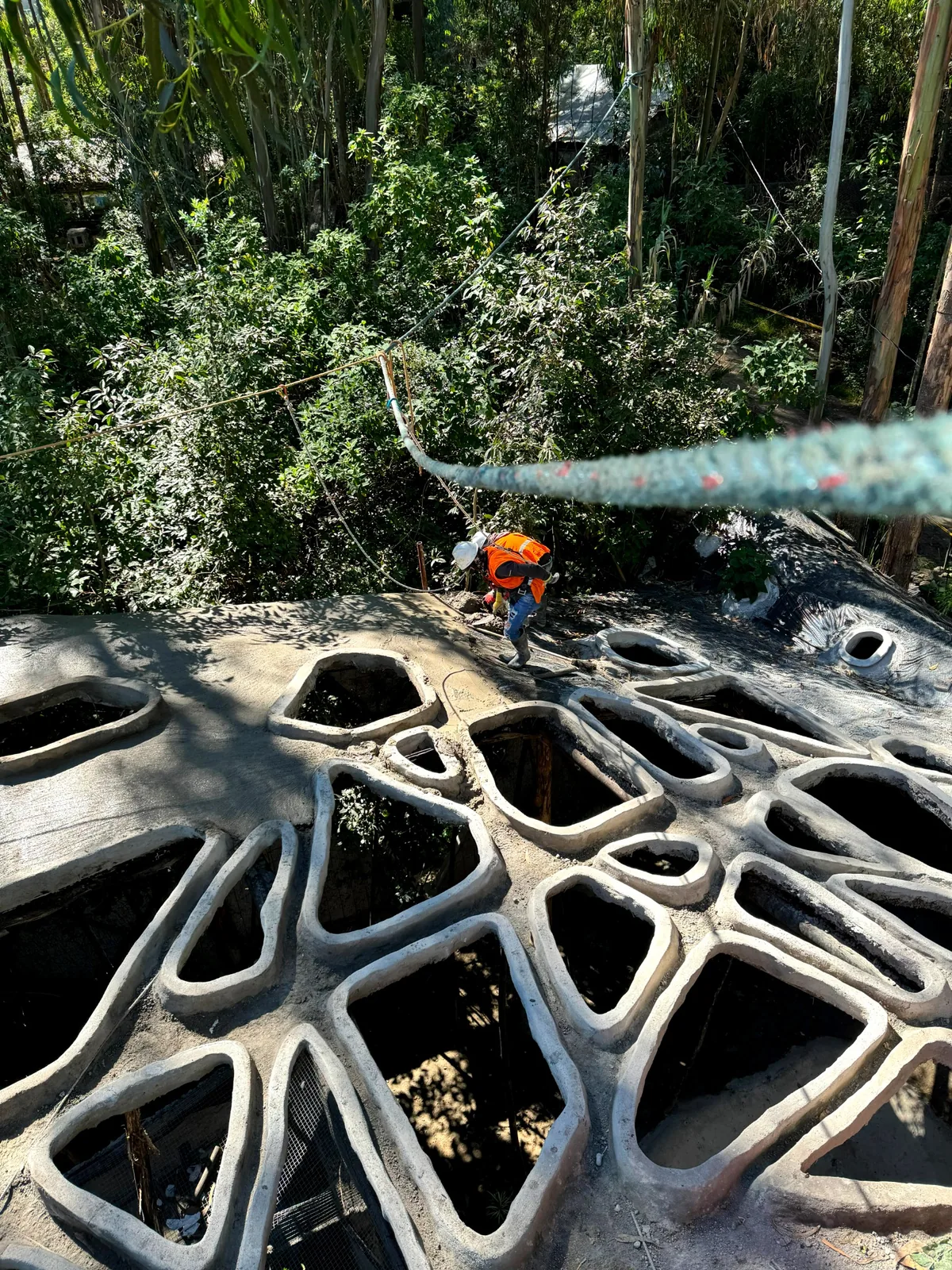
Una cubierta inspirada en un caparazón actúa como sistema pasivo: capta sol, conserva calor, retiene humedad y permite crear zonas de asoleamiento y refugio. La estructura combina madera local, tierra, vidrio y geometrías orgánicas.
A shell-inspired roof acts as a passive system: capturing sunlight, retaining heat, preserving humidity, and allowing the creation of sunbathing and shelter zones. The structure combines local wood, earth, glass, and organic geometries.
03
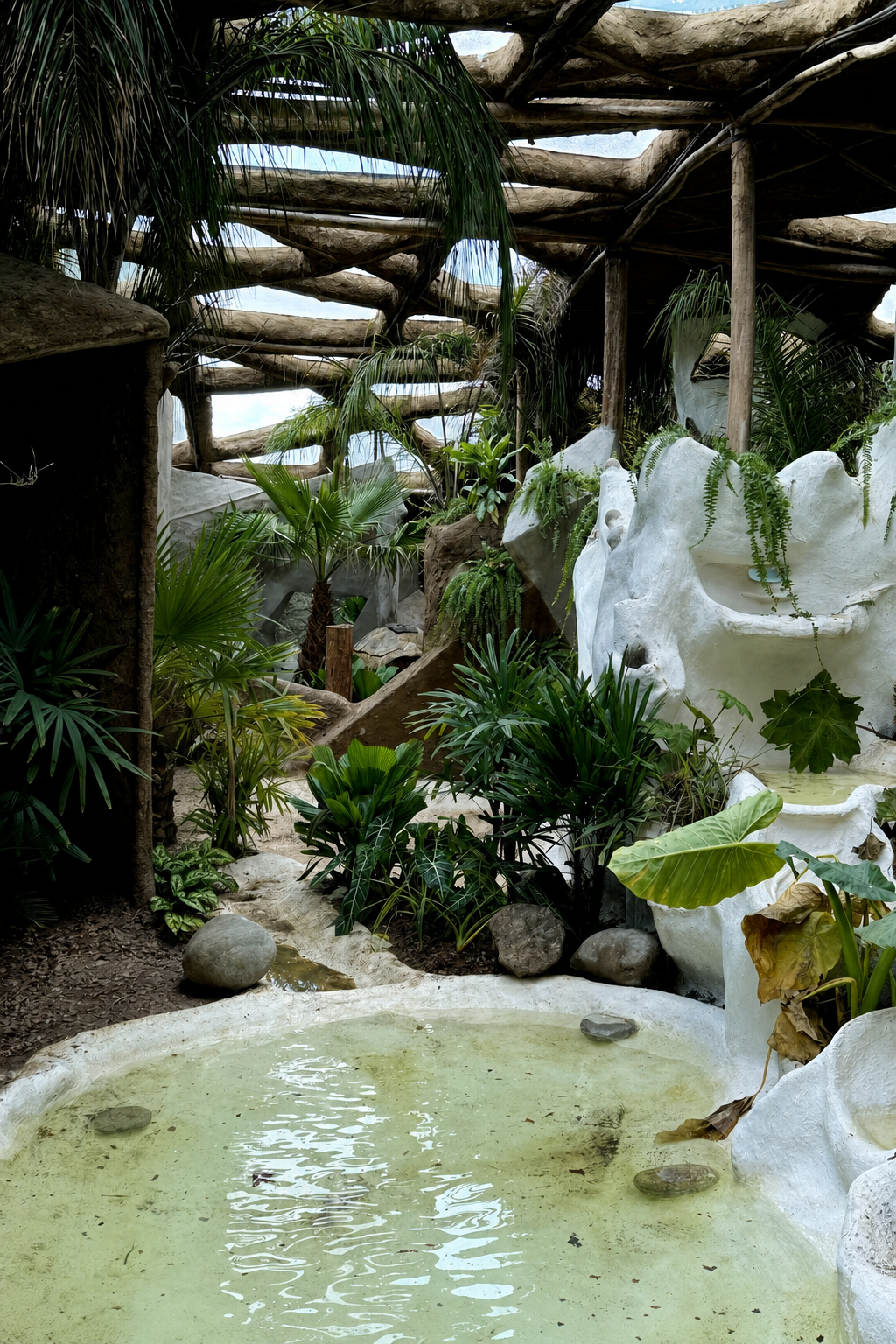
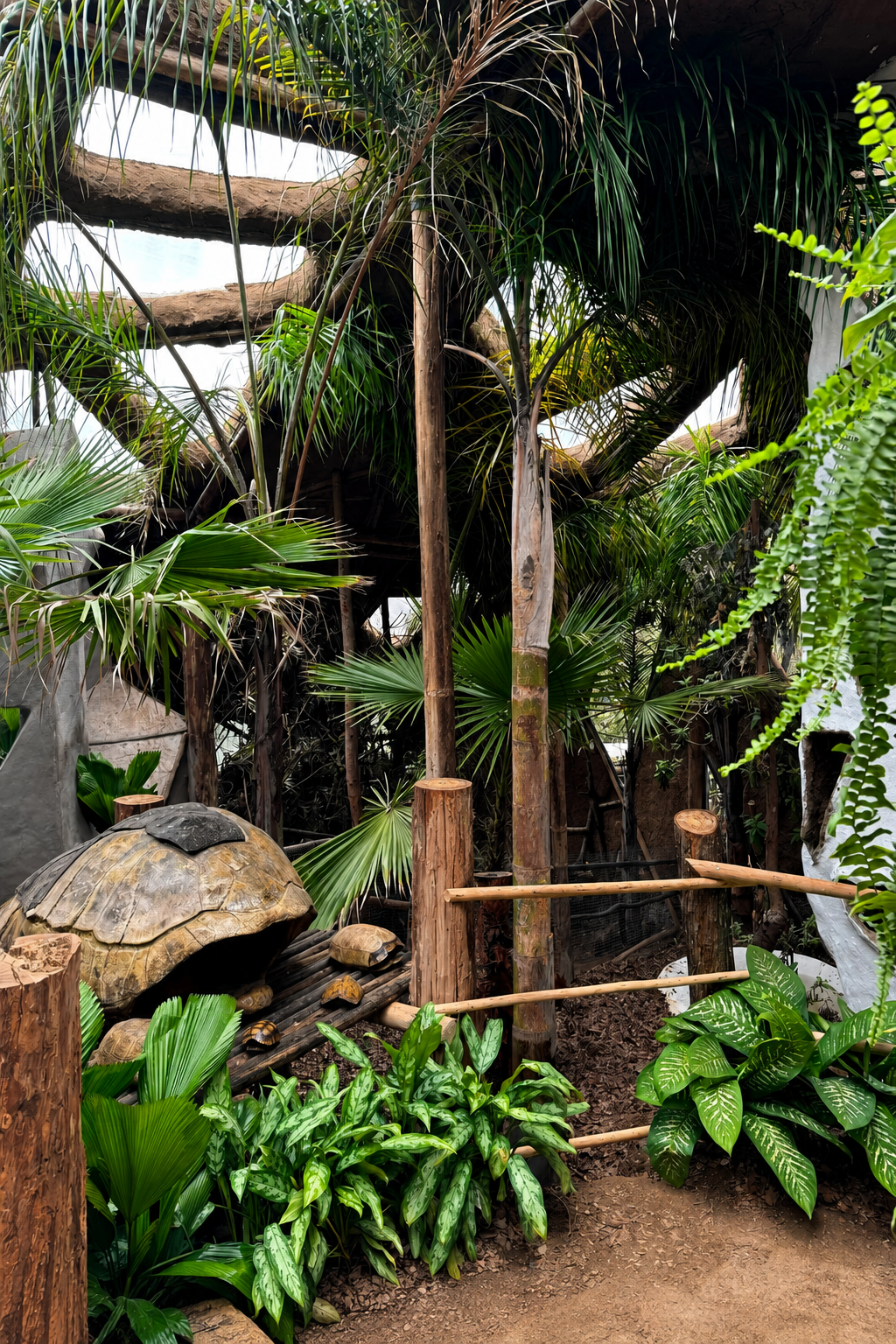
El interior incorpora estanques, cascadas hechas con materiales reciclados, vegetación y suelo natural para recrear un ambiente tropical. El resultado es un santuario donde las especies pueden moverse, asolearse, refugiarse y habitar un entorno más cercano a sus ecosistemas de origen.
The interior incorporates ponds, waterfalls made from recycled materials, vegetation, and natural soil to recreate a tropical environment. The result is a sanctuary where species can move, sunbathe, shelter, and inhabit an environment closer to their native ecosystems.
◆ Materiales◆ Materials
Tierra compactada
Compacted earth
Del propio sitio, sin transporte
From the site itself, no transport
Madera local
Local timber
Eucalipto cultivado en el sitio utilizado para la construcción de la estructura
Eucalyptus grown on site used for the structural construction
Plantas nativas
Native plants
Pared de bromelias integrada al hábitat
Bromeliad wall integrated into the habitat
Materiales reciclados
Recycled materials
Cascada construida con llantas recicladas
Waterfall built with recycledtires